
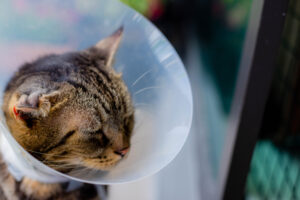
The e-collar is the most disliked part of pet recovery after surgery, but it’s also critically important.
When your pet undergoes surgery, ensuring a safe and successful recovery is your top priority. While rest, medication, and follow-up visits are crucial parts of the healing process, one of the most essential tools for post-surgical care is often the simplest: the e-collar. Also known as the “Elizabethan collar” or “cone of shame,” this device plays a vital role in preventing your furry friend from accidentally causing harm to their surgical site. Let’s talk about why the e-collar is important for pet recovery after surgery.
What Is an E-Collar and Why Is It Important?
An e-collar is designed to prevent your pet from licking, chewing, or scratching the affected area. While it may look uncomfortable or even comical at first glance, this cone-shaped collar serves an important medical purpose. Pets instinctively groom themselves to relieve irritation, but when a surgical incision or wound is involved, that behavior can cause serious complications.
Without an e-collar, pets can:
- Reopen sutures or incisions, leading to infections.
- Introduce bacteria to the wound site.
- Delay healing or create the need for additional procedures.
- Ingest topical medications or ointments that may be harmful.
By wearing an e-collar, your pet is protected from self-inflicted injuries that could undo the work of your veterinarian and prolong recovery time.
How the E-Collar Supports Healing
Post-surgical wounds often feel itchy or sore as they heal, which naturally prompts pets to lick or bite the area. The e-collar acts as a gentle but effective barrier that allows the body to heal undisturbed. This prevents moisture, bacteria, and trauma from interfering with the recovery process.
In addition to protecting incisions, the e-collar also ensures that prescribed topical medications stay in place and are absorbed properly. This contributes to faster healing and helps prevent secondary infections that could otherwise develop from contamination or irritation.
Helping Your Pet Adjust to the E-Collar
It’s common for pets to resist wearing an e-collar initially. They may bump into furniture, struggle to eat, or appear uncomfortable. However, most pets adapt within a day or two. You can help ease the transition by:
- Offering comfort and reassurance.
- Adjusting food and water bowls to make access easier.
- Keeping an eye on your pet during the first few hours of wear.
- Making sure the collar fits securely but not too tightly.
Remember, the short-term inconvenience of wearing an e-collar is well worth the long-term benefits of a smooth recovery.
Alternatives to the Traditional Cone
While the classic plastic cone is still widely used, there are several alternatives available today that provide similar protection with added comfort. These include:
- Inflatable e-collars: Softer and less restrictive while still preventing access to wounds.
- Soft fabric cones: More flexible and comfortable for pets who dislike hard plastic.
- Surgical recovery suits: Full-body garments that prevent licking without restricting movement.
Carefully monitor your pet whenever using a new alternative to the e-collar to ensure it works as intended. You can also talk to your veterinarian about which option best suits your pet’s needs and temperament.
Protecting Your Pet’s Health
Using an e-collar for pet recovery after surgery is one of the simplest and most effective ways to ensure your pet heals properly. It may seem like a small detail, but this protective device can make the difference between a quick, complication-free recovery and a prolonged, stressful healing process. Always follow your veterinarian’s instructions for how long to keep the e-collar on, and resist the urge to remove it early.
Your pet’s comfort matters, but so does their safety. By keeping the e-collar on as directed, you’re giving them the best chance at a full and healthy recovery.
Trust Maryland Veterinary Surgical Services With Your Companion’s Health
Your companion’s health is important, and the team at MVSS is ready to provide the best care possible for your furry family. We are dedicated to combining comprehensive exams and assessments with informative and honest discussions of your companion’s care. Once we have worked with you to decide on the best course of action for your dog, our professionals will use their surgical expertise to work towards the goal of giving your companion an active and pain-free life. We are proud to serve loyal companions in Catonsville and Baltimore. To learn more about our services, give us a call at 410-788-4088 or visit us online. For more information and tips for dog health, follow us on Facebook and Pinterest.