
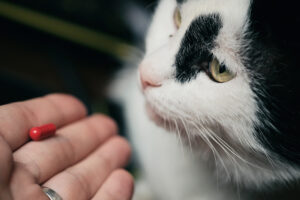
Getting pets to take pills is often a frustrating experience!
For many pet owners, medication time can turn into a stressful struggle. Whether it’s a daily prescription or a temporary antibiotic, getting pets to take pills is often easier said than done. Pets can be surprisingly good at spitting out tablets, hiding them under their tongue, or eating everything in their bowl except the medicine. The good news? With the right approach, patience, and a few creative tricks, giving your pet medication can become a much smoother experience. We are sharing practical, vet-recommended tips for getting pets to take pills safely and with less stress for both you and your furry friend.
Hide Pills in Food or Treats
One of the most common strategies for getting pets to take pills is disguising the medication inside something tasty. Strong-smelling and soft foods tend to work best, such as:
- Peanut butter (xylitol-free only)
- Cheese
- Canned pet food
- Meatballs or deli meat
- Pill pockets or specialty pet treats
Make sure the pill is fully covered so your pet doesn’t notice the texture or taste. For picky pets, try offering a “test bite” of plain food first, followed by the hidden pill in the second bite to build trust and reduce suspicion.
Tip: Always check with your veterinarian before crushing or opening a capsule, as some medications must be swallowed whole.
Use a Pill Dispenser or Pill Gun
Some pets simply refuse medicated treats, especially cats. In those cases, a pill dispenser (sometimes called a pill popper or pill gun) can make the process faster and more accurate.
To use one safely:
- Gently tilt your pet’s head upward.
- Place the dispenser toward the back of the tongue.
- Release the pill and close their mouth.
- Gently stroke the throat to encourage swallowing.
This method can be especially useful when getting pets to take pills that cannot be chewed or dissolved.
Follow With Water or a Small Treat
After your pet swallows a pill, offering a little water or a soft treat can help wash it down and prevent the tablet from sticking in the throat. This is particularly important for cats, who can experience irritation if pills linger in the esophagus.
A syringe of water (recommended by your vet) or a lickable treat can make swallowing easier and more comfortable.
Try Compounded or Alternative Medication Forms
If you’ve tried everything and still struggle with getting pets to take pills, talk to your veterinarian about medication alternatives. Many prescriptions can be compounded into:
- Flavored liquids
- Chewable tablets
- Powders
- Transdermal gels (applied inside the ear)
These options can make getting pets to take pills, or their equivalent, significantly easier, especially for anxious or elderly pets.
Stay Calm and Patient
Pets are incredibly perceptive. If you’re stressed, they will be too. When working on getting pets to take pills:
- Use a calm, reassuring voice
- Avoid turning medication time into a chase
- Reward with praise, affection, or a favorite treat afterward
Positive reinforcement builds trust and reduces resistance over time.
When to Contact Your Veterinarian
If your pet consistently refuses medication, vomits after taking a pill, or appears distressed, call your vet. Never skip doses or change how a medication is given without professional guidance. Your veterinarian may recommend an easier alternative or provide hands-on instruction for safe administration.
Final Thoughts on Getting Pets to Take Pills
While getting pets to take pills can be challenging, it becomes much more manageable with the right methods and a little creativity. Whether you use treats, pill dispensers, or compounded medications, the goal is always the same: keeping your pet healthy, safe, and stress-free.
Trust Maryland Veterinary Surgical Services With Your Companion’s Health
Your companion’s health is important, and the team at MVSS is ready to provide the best care possible for your furry family. We are dedicated to combining comprehensive exams and assessments with informative and honest discussions of your companion’s care. Once we have worked with you to decide on the best course of action for your dog, our professionals will use their surgical expertise to work towards the goal of giving your companion an active and pain-free life. We are proud to serve loyal companions in Catonsville and Baltimore. To learn more about our services, give us a call at 410-788-4088 or visit us online. For more information and tips for dog health, follow us on Facebook and Pinterest.